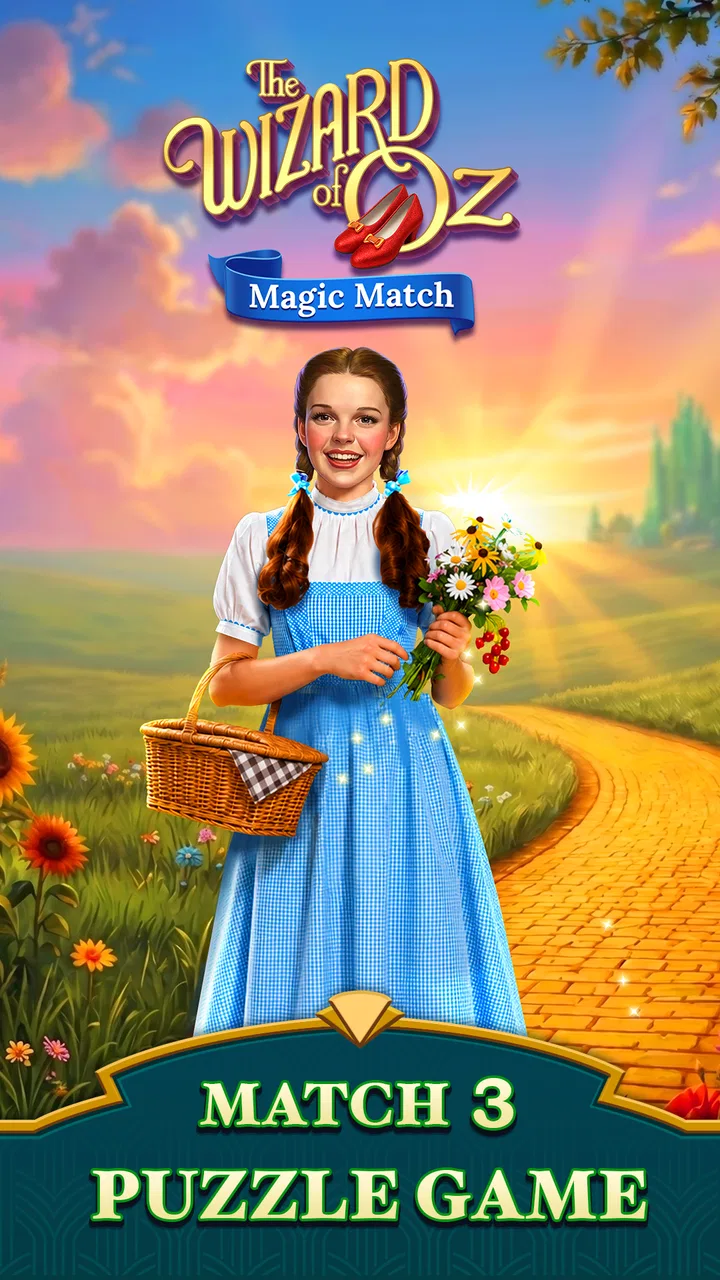
The Wizard of Oz Magic Match 3
- 4.3
- Rating
- 10.00M
- Installs
- Free
- Price

 Analysis by App-foxy
I spent my first sessions with Wizard of Oz Magic Match 3 expecting a familiar match-three game wrapped in a recognizable story world. That is broadly what it is, but the presentation gives the basic puzzle loop more personality than many lookalikes. The game takes me through a colorful Oz setting with its well-known characters, while each level asks me to clear matching pieces and work around the obstacles placed on the board. It is easy to understand within minutes, yet it still creates those small “one more try” moments that make this genre so effective.
That immediate accessibility is important. I do not need to learn a complicated control scheme, build a team, or remember a large set of rules before playing. A tap is enough to make a move, and the board communicates most of what I need through color, animation, and simple visual cues. For a short break, it feels inviting rather than demanding. The free download also makes it straightforward to try, although the in-app purchase range reaches from $0.99 to $199.99 per item, so I would approach the optional spending carefully.
How the magic holds up beyond the first week
I find that the first week is a useful test of whether the Oz theme and short board-solving sessions fit naturally into your day. Beyond that, I pay more attention to how I respond when a familiar level takes another attempt: a brief pause can make the next visit feel like a fresh puzzle rather than a demand to keep pushing. That shift in expectations is what makes the longer-term routine worth considering.
You May Also Like

 Pandora - Music & Podcasts
Pandora’s Music Is Easy to Start, but Harder to Recover
Pandora’s strength is its low-effort path from a seed to a station. Its weak spot is how much confidence it asks you to place in connection, setup, and quiet recovery.

 8 Ball Pool
 Is Built on Rivalries, Rematches, and Routine
A close look at the rivalries, rematches, shared routines, and unanswered safety questions that turn a quick pool match into a persistent mobile community.

 Samsung Music
’s Quiet Strength Is Playing What You Already Own
Its reach comes less from spectacle than from dependable access to a personal library. That simplicity is both the app’s strongest retention engine and its ceiling.

 AccuWeather: Weather Radar
AccuWeather Review: A Quick, Clear Forecast for Everyday Decisions
For everyday plans, the best forecast is the one you can understand quickly. AccuWeather makes rain timing, radar, and local conditions easy to act on, with a few trade-offs.

 Hill Climb Racing
Why Hill Climb Racing Still Turns Crashes Into One More Run
A tiny car, a bumpy hill and one more upgrade: Hill Climb Racing keeps resurfacing because its simple chaos makes every near-miss feel personal.

 AliExpress - Shopping App
AliExpress Makes Global Shopping Feel Personal, but Shoppers Bear the Risk
AliExpress turns a global marketplace into a pocket-sized discovery engine. Its reach is useful, its shopping loop compelling, and its trade-offs easy to miss.
More From Our News Desk
View All News


The first sessions are friendly, colorful, and easy to fit into a routine
The strongest part of the opening experience is how quickly the game establishes its rhythm. I can start a level, scan the available matches, make a few moves, and understand whether the board is going my way without committing to a long play session. That makes it a natural choice for a commute, a waiting room, or a few quiet minutes before bed. The Oz theme also helps the early stages feel less anonymous than a collection of plain colored tiles.
As I played, I found that the pleasure is not only in spotting a match. It comes from looking for a move that creates a larger reaction, clears a difficult area, or leaves the board in a better position for the next turn. A quick match may solve the immediate problem, but a more patient move can produce a much better chain. That difference gives the opening levels a modest strategic layer without making them feel like a serious puzzle competition.
The game is particularly approachable for players who want a gentle puzzle experience rather than a complex strategy title. Its Everyone content rating reflects that broad accessibility, and the controls are simple enough for someone who has never played a match-three game to understand. At the same time, fans of the genre will recognize the familiar satisfaction of planning around limited opportunities. I would recommend starting without rushing through every available move. Even early boards reward taking a second to inspect the whole layout.
One useful habit is to look at the bottom and edges of the board before making an obvious central match. Matches near awkward corners often have more practical value than a flashy move in an open area. This is not a dramatic hidden system; it is simply the kind of board awareness that becomes useful once the introductory ease starts to fade. I also learned to avoid triggering a large combination immediately when it would remove a more valuable setup. Saving a strong move for a crowded section can turn a failed attempt into a clear.
Why the Oz setting matters, and where it does not
The characters and setting give the game a warmer identity than a completely generic puzzle app. Seeing the familiar world around the boards makes progression feel like movement through a themed adventure rather than an endless sequence of disconnected challenges. For players who already enjoy the Wizard of Oz universe, that atmosphere may be enough to make routine levels feel more personal.
Still, I would not choose this game solely for a deep narrative. The main attraction is the puzzle loop, with the theme acting as decoration, motivation, and a pleasant reason to continue. If you want a story-heavy adaptation with substantial dialogue or character development, this is not the right expectation. The Oz material supports the game; it does not replace the match-three structure.
That distinction helped me judge the first week fairly. The novelty is real, but it is not the entire experience. The game has to earn continued attention through board variety, manageable difficulty, and the satisfaction of improving at its patterns. During the opening stretch, it succeeds because the basic actions are clear and the setting makes repetition easier to accept.
What changes when the opening novelty wears off
After the first burst of curiosity, I stopped asking whether the game looked charming and started asking whether I wanted to return to it. That is the more important test for a puzzle app. The answer depends on what I want from mobile gaming. If I like compact sessions and enjoy gradually learning how to read boards, the game has recurring value. If I need constant mechanical change, the familiar match-and-clear format may begin to feel routine.
The best way to keep it enjoyable is to treat it as a small daily activity rather than a game that must occupy a whole evening. I found that a few deliberate levels felt better than playing until every move became automatic. Short sessions preserve the satisfying part of the loop and reduce the sense that I am repeating the same action for too long. This is also where the game works better than many more demanding puzzle alternatives: it asks for attention, but not a large time commitment.
For comparison, a pure logic puzzle may offer deeper reasoning and fewer distractions, while a competitive match-three game may provide stronger pressure through rankings or head-to-head play. This title sits between those extremes. It is more relaxed than a competitive alternative and more characterful than a bare puzzle collection, but it may not satisfy someone looking for difficult, abstract problem solving. Its lasting appeal comes from convenience and theme, not from becoming a completely different kind of game.
Living with the game over time
Over time, I would judge the game by whether it remains an easy, welcome choice on a busy day, not by how often I open it or how quickly I progress. Keeping sessions brief and deciding in advance how to handle optional spending can preserve its relaxed appeal, especially when a board becomes stubborn. With those habits in mind, the lasting question is whether its steady match-three rhythm is enough for you.
Month-to-month value depends on your tolerance for repetition
The game has been available since May 18, 2016, and that longevity says something about the appeal of its basic formula. It is not trying to reinvent match-three play. Instead, it packages a proven structure in a recognizable world and makes it easy to revisit. That can be a strength when I want something dependable, but it also means the game’s long-term value is closely tied to how much I enjoy repeating a familiar style of puzzle.
In practical terms, I can see myself returning when I want a low-friction distraction rather than a major gaming session. The boards give me a small goal, the visual feedback makes progress easy to read, and the Oz presentation adds a reason to continue. This is useful for people who like games that can be picked up after a day or a week without relearning the controls.
The current version is 1.0.7008, and the game supports devices running Android 7.0 or later. Those details matter if I am deciding whether it fits an older phone or tablet. On a compatible device, the simple controls make it feel suitable for casual play, but I would still leave some storage and battery headroom for any game with animated boards and frequent visual effects. I would not buy a new device for it; its appeal is that it belongs in an existing casual gaming routine.
One of the more useful long-term approaches is to separate progress from spending. When a level becomes frustrating, I first replay it with a different opening plan rather than immediately treating a purchase as the solution. In match-three games, a poor first move can shape the entire board, so changing the order of actions sometimes matters more than adding assistance. This keeps the game’s puzzle element intact and prevents the progression loop from turning into a shopping decision.
Free access is appealing, but the purchase structure deserves attention
The game is free to install, which lowers the risk of trying it. That is a genuine advantage for a player who is curious about the Oz theme but does not yet know whether the puzzle format will stick. The important distinction is that free entry does not mean every part of the experience is equally free of pressure. Optional purchases can become tempting when a level takes several attempts or when I want to move forward without waiting.
I would recommend deciding on a personal spending rule before playing for a long period. For example, I might choose to enjoy it without purchases, or set a small fixed limit and stop there. The listed purchase range extends from $0.99 to $199.99 per item, so the upper end is far beyond what I would consider a casual impulse buy. That does not make the game unsuitable, but it does make awareness important, especially on a shared device or when a child may be playing.
The Everyone rating makes the game broadly approachable, but age suitability and spending suitability are different questions. If I were handing it to a younger player, I would use the device’s purchase protections and explain that a difficult level is not a reason to press a payment button. For adults, the same advice is useful because frustration can make optional help feel more urgent than it really is.
The maintenance burden is low, but the habit can become repetitive
One reason I can imagine keeping this game installed is that it does not require a large mental reset. I do not need to remember a complicated story or maintain a detailed build between sessions. I can open it after several days and return to the board-based routine almost immediately. That low maintenance is valuable for a casual game, particularly when I want something predictable during small gaps in the day.
The trade-off is that the same simplicity can make the game feel disposable if I am not in the mood for match-three repetition. There is no point forcing a daily habit just because the game is easy to open. I get more value when I use it intentionally: a short break, a quiet wind-down, or a way to occupy my hands while waiting. When I play automatically for too long, the colorful presentation cannot fully hide the repeated structure.
A practical routine is to stop after a natural point instead of chasing an immediate win indefinitely. If I lose several times, I take that as a signal to pause and return later. This helps in two ways: I avoid turning a relaxing game into a source of irritation, and I often come back with a clearer view of the board. The game works best as a flexible companion, not as a task that demands completion every day.
Where fatigue starts to appear
The main source of fatigue is the genre itself. Matching pieces, clearing areas, and searching for combinations are satisfying, but those actions can blur together over a long session. The Wizard of Oz setting softens that repetition, yet it cannot eliminate it. Players who quickly tire of familiar puzzle loops should try the game briefly before committing to it as a regular pastime.
Another possible frustration is the gap between seeing a good move and actually getting the board to cooperate. Match-three boards include an element of uncertainty, so careful planning does not guarantee a win. I appreciate that tension in moderation, but it can feel unfair when a promising attempt collapses because the next pieces do not help. The healthiest response is to treat each attempt as a new arrangement rather than assuming the previous strategy must work again.
I also noticed that visual charm can create an expectation of constant discovery. Once the setting feels familiar, the puzzles have to carry more of the experience. That is why I would not describe this as an endlessly fresh game for every player. Its lasting value is strongest for someone who enjoys a steady, comfortable format and likes the idea of progressing through a themed world at their own pace.
Who should install it, and who should skip it
I think it is a good fit for players who want a free casual puzzle game with a recognizable fantasy setting, short sessions, and controls that are easy to pick up. It also suits someone who likes improving through small decisions rather than mastering complex systems. The game can work well on a family device, provided that purchase controls are handled responsibly.
I would steer competitive players toward a game built around direct competition, rankings, or more demanding strategic depth. I would also suggest a different option to anyone who dislikes in-app purchase pressure in principle, even when purchases are optional. Similarly, fans seeking a substantial Wizard of Oz story may find the theme enjoyable but lighter than expected. The right question is not whether the game contains the setting; it is whether a themed match-three loop is enough to keep you interested.
For an everyday example, I can imagine opening it during a ten-minute lunch break, completing a couple of boards, and closing it before the session turns into a long distraction. In that role, it is effective because the objective is visible and the controls require little setup. I would not use it as my main evening game, though. After a demanding day, I may prefer a title with a stronger sense of discovery or a puzzle that asks me to think in a completely different way.
My long-term verdict
The lasting value here comes from reliable short sessions, not endless novelty. I enjoyed the way the Oz setting gives a familiar puzzle formula a distinct mood, and I appreciate that the basic play is accessible without a tutorial-heavy learning curve. The game earns a place on my device when I want a calm, colorful distraction that I can revisit without preparation.
It does not earn permanent space automatically. The repeated match-three structure, the possibility of frustration on difficult boards, and the presence of purchases mean I need to use it on my own terms. I would keep notifications and spending habits under control, play in short bursts, and avoid measuring the experience by how quickly I can advance. That approach preserves the part I like: making a few thoughtful moves and watching a board open up.
Developed by Zynga, the game has attracted over 10 million installs, with a 4.3 average from around 338 thousand ratings and around 69 thousand reviews. Those figures suggest a substantial audience, but they do not decide whether it belongs in your routine. My recommendation is more specific: install it if the Wizard of Oz atmosphere appeals to you and you already enjoy casual match-three puzzles. Give it enough time to pass the first-week novelty, then keep it only if the short, repeatable sessions still feel like a pleasant break rather than another obligation.
For me, that is a qualified recommendation rather than an unconditional one. It is polished enough to be inviting, simple enough to maintain, and distinctive enough to avoid feeling completely anonymous. But its future on my phone depends on moderation. Used as a compact puzzle habit, it has recurring value; expected to provide constant surprise, deep narrative, or competitive intensity, it will probably disappoint.
FAQs for The Wizard of Oz Magic Match 3
01What is The Wizard of Oz Magic Match 3?
The Wizard of Oz Magic Match 3 is a free-to-play puzzle game based on the classic Wizard of Oz universe. You complete match-three boards by combining three or more identical pieces, then use special boosters to clear difficult sections. The game also includes story scenes, familiar characters, themed locations, events, and collectible rewards, making it more than a simple series of standalone puzzles.
02Is The Wizard of Oz Magic Match 3 free to download and play?
Yes, the game can generally be downloaded and played for free on supported Android and iOS devices. However, it uses optional in-app purchases for items such as extra moves, lives, boosters, or other progress-related advantages. You can enjoy a substantial amount of content without paying, but later levels and limited-time events may encourage purchases, so parental controls and purchase restrictions are worth enabling.
03Does the game require an internet connection?
An internet connection is usually recommended because the game connects to online services for advertisements, account features, events, competitions, updates, and synchronization. Some previously loaded puzzle content may work temporarily offline, but availability can vary depending on the device and game version. For the most reliable experience, especially when claiming event rewards or restoring progress, play while connected to Wi-Fi or mobile data.
04Is The Wizard of Oz Magic Match 3 suitable for children?
The game is colorful, easy to understand, and built around a familiar fantasy world, so it can appeal to children and families. Nevertheless, it includes advertisements, optional purchases, timed rewards, and mechanics designed to encourage repeated play. Parents should review the age rating in their region, supervise younger players, and disable unauthorized purchases. The difficulty can also become challenging, even though the basic matching rules are simple.
05What are the main advantages and disadvantages of the game?
The biggest strengths are its attractive Wizard of Oz presentation, recognizable characters, accessible match-three gameplay, frequent events, and a large number of levels. Special pieces and boosters help keep boards interesting. On the negative side, progress may slow when lives, moves, or boosters run out, and free players may encounter advertisements or purchase prompts. Some players may also find the later difficulty and energy limits frustrating.
Pros
- Colorful Oz-themed graphics and charming character animations.
- Hundreds of match-3 levels provide plenty of content.
- Special boosters make difficult boards more manageable.
- Regular events add variety beyond the standard campaign.
- Simple controls make it accessible for casual players.
Cons
- Later levels can become heavily dependent on lucky tile layouts.
- Lives limit how long you can play in one session.
- Some boosters and moves may require premium currency.
- Frequent events and offers can feel distracting.
- The game may use considerable storage and battery over time.

The Wizard of Oz Magic Match 3
Gallery